How To Keep Your AC Unit Running Smoothly
A well-maintained air conditioning unit is crucial for staying comfortable during hot weather, reducing energy bills, and extending the lifespan of your system. Neglecting maintenance can lead to decreased efficiency, costly repairs, and even premature replacement. Here’s a comprehensive guide on how to keep your AC unit running smoothly:
1. Regular Filter Replacement: The Foundation of AC Health
- Why it matters: A dirty air filter restricts airflow, forcing your AC unit to work harder, which reduces efficiency and can lead to overheating. It also allows dust and allergens to circulate throughout your home.
- How often: Replace your air filter every 1-3 months, depending on usage and the type of filter. Homes with pets or allergies may require more frequent changes.
- How to do it: Locate the filter compartment (usually in the indoor unit or near the return air vent). Remove the old filter and replace it with a new one of the correct size and type. Make sure the arrow on the filter points in the direction of airflow.
2. Clean the Outdoor Unit: Clearing the Path for Airflow
- Why it matters: The outdoor unit (condenser) needs to dissipate heat effectively. Debris like leaves, grass clippings, and dirt can block airflow and reduce efficiency.
- How often: Clean the outdoor unit at least once a year, ideally before the cooling season begins.
- How to do it:
- Turn off the power: Disconnect the power to the unit at the breaker box.
- Remove debris: Clear away any leaves, branches, or other debris from around the unit.
- Clean the fins: Use a garden hose with a gentle spray nozzle to clean the fins from the inside out. Avoid using a pressure washer, as it can damage the fins. You can also use a fin comb to straighten bent fins.
- Clear the area: Ensure there’s at least 2-3 feet of clear space around the unit for proper airflow.
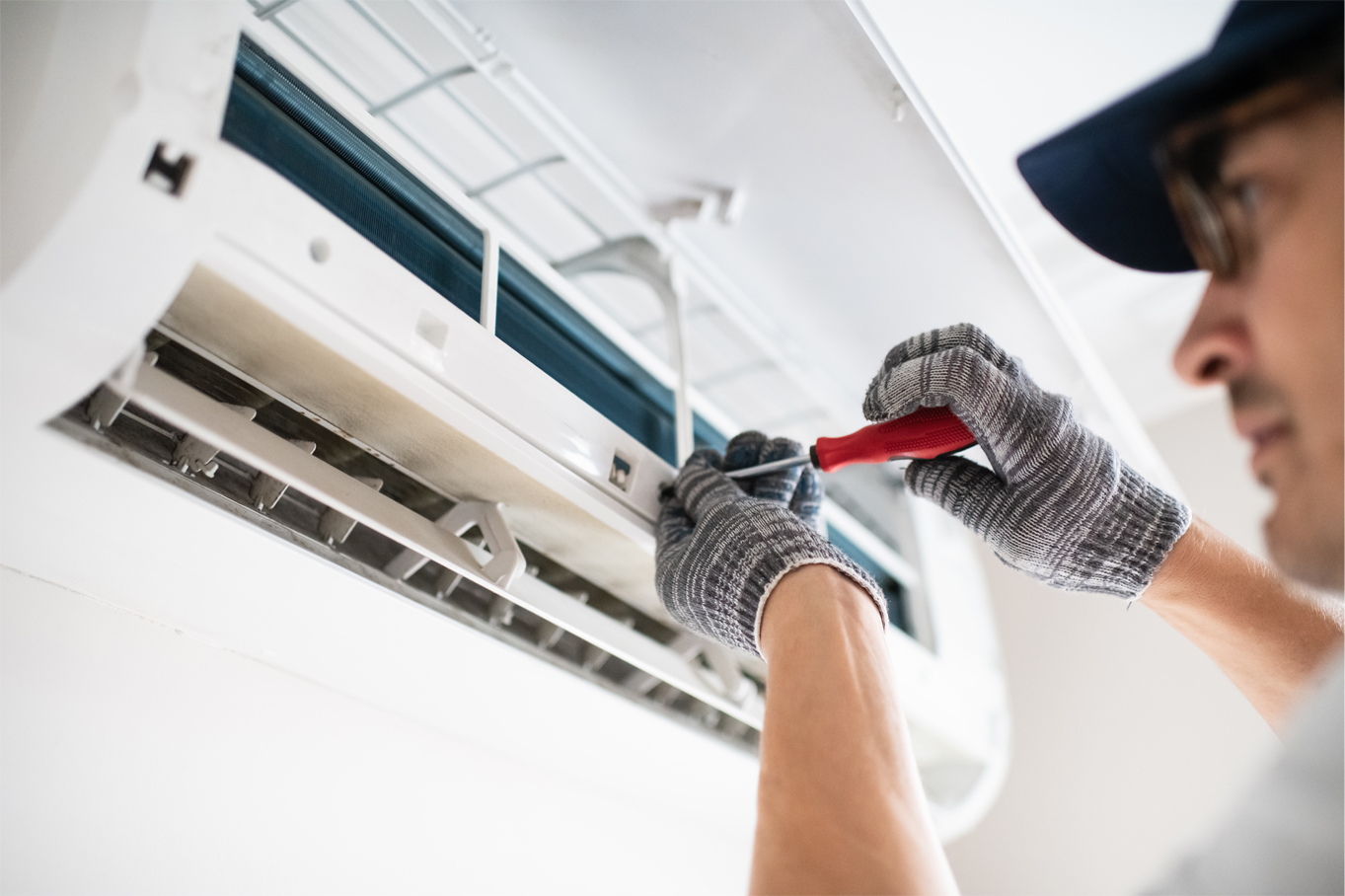
3. Schedule Professional Maintenance: The Expert’s Touch
- Why it matters: A professional HVAC technician can perform a thorough inspection and tune-up, identifying potential problems before they become major issues.
- How often: Schedule professional maintenance at least once a year, preferably in the spring before the cooling season.
- What to expect: A technician will typically:
- Inspect and clean the coils.
- Check refrigerant levels.
- Inspect and tighten electrical connections.
- Lubricate moving parts.
- Test the system’s performance.
4. Keep Vents and Registers Clear: Ensuring Proper Air Distribution
- Why it matters: Blocked vents and registers restrict airflow, making your AC unit work harder to cool your home.
- How often: Regularly check vents and registers to ensure they are not blocked by furniture, rugs, or other objects.
- How to do it: Simply move any obstructions away from vents and registers.
5. Seal Air Leaks: Preventing Energy Waste
- Why it matters: Air leaks allow conditioned air to escape and unconditioned air to enter your home, increasing energy consumption and making it harder to maintain a comfortable temperature.
- How often: Inspect your home for air leaks regularly, especially around windows, doors, and ductwork.
- How to do it:
- Caulk and weatherstrip: Seal gaps around windows and doors with caulk and weatherstripping.
- Insulate ductwork: Insulate exposed ductwork in attics and crawl spaces to prevent heat loss or gain.
- Seal penetrations: Seal any holes or cracks in walls and ceilings where pipes or wires enter.
6. Use a Programmable Thermostat: Optimizing Energy Usage
- Why it matters: A programmable thermostat allows you to set different temperatures for different times of the day, reducing energy consumption when you’re away or asleep.
- How often: Program your thermostat to adjust the temperature based on your schedule.
- How to do it: Follow the instructions that came with your thermostat to set up a schedule that meets your needs. Consider raising the temperature a few degrees when you’re away and lowering it when you’re home.
7. Monitor Refrigerant Levels: Maintaining Optimal Cooling
- Why it matters: Low refrigerant levels can significantly reduce your AC unit’s cooling capacity and efficiency.
- How often: This is typically checked during professional maintenance.
- What to look for: Signs of low refrigerant include:
- Weak airflow.
- Ice buildup on the evaporator coil.
- Higher than usual energy bills.
- If you suspect low refrigerant, contact a qualified HVAC technician to diagnose and repair the leak. Do not attempt to add refrigerant yourself.
8. Listen for Unusual Noises: Identifying Potential Problems
- Why it matters: Unusual noises can indicate a problem with your AC unit, such as a loose part, a failing motor, or a refrigerant leak.
- How often: Pay attention to the sounds your AC unit makes when it’s running.
- What to listen for:
- Banging
- Screeching
- Grinding
- Hissing
- If you hear any unusual noises, turn off the unit and contact a qualified HVAC technician.
9. Consider a Smart Thermostat: Advanced Energy Management
- Why it matters: Smart thermostats offer advanced features like remote control, energy usage tracking, and learning capabilities, allowing you to optimize your AC unit’s performance and save energy.
- How often: Install and configure a smart thermostat according to the manufacturer’s instructions.
- What to expect: Smart thermostats can learn your habits and automatically adjust the temperature to maximize comfort and efficiency. They can also send you alerts if there’s a problem with your AC unit.
10. Protect the Outdoor Unit: Shielding from the Elements
- Why it matters: While designed for outdoor use, excessive exposure to harsh weather can shorten the lifespan of your outdoor unit.
- How often: Consider protecting the unit, especially during extreme weather events.
- How to do it:
- Avoid covering completely: Do not completely cover the unit, as this can restrict airflow.
- Use a partial cover: Consider a partial cover during the off-season to protect it from snow and ice.
- Trim vegetation: Keep vegetation trimmed back to prevent it from growing into the unit.
By following these tips, you can keep your AC unit running smoothly, efficiently, and reliably for years to come. Remember that regular maintenance is key to preventing costly repairs and extending the lifespan of your system. When in doubt, consult with a qualified HVAC professional for expert advice and service.